
RNG Odds and Virtual Greyhound Betting
Best Greyhound Betting Sites – Bet on Greyhounds in 2026
 Available in US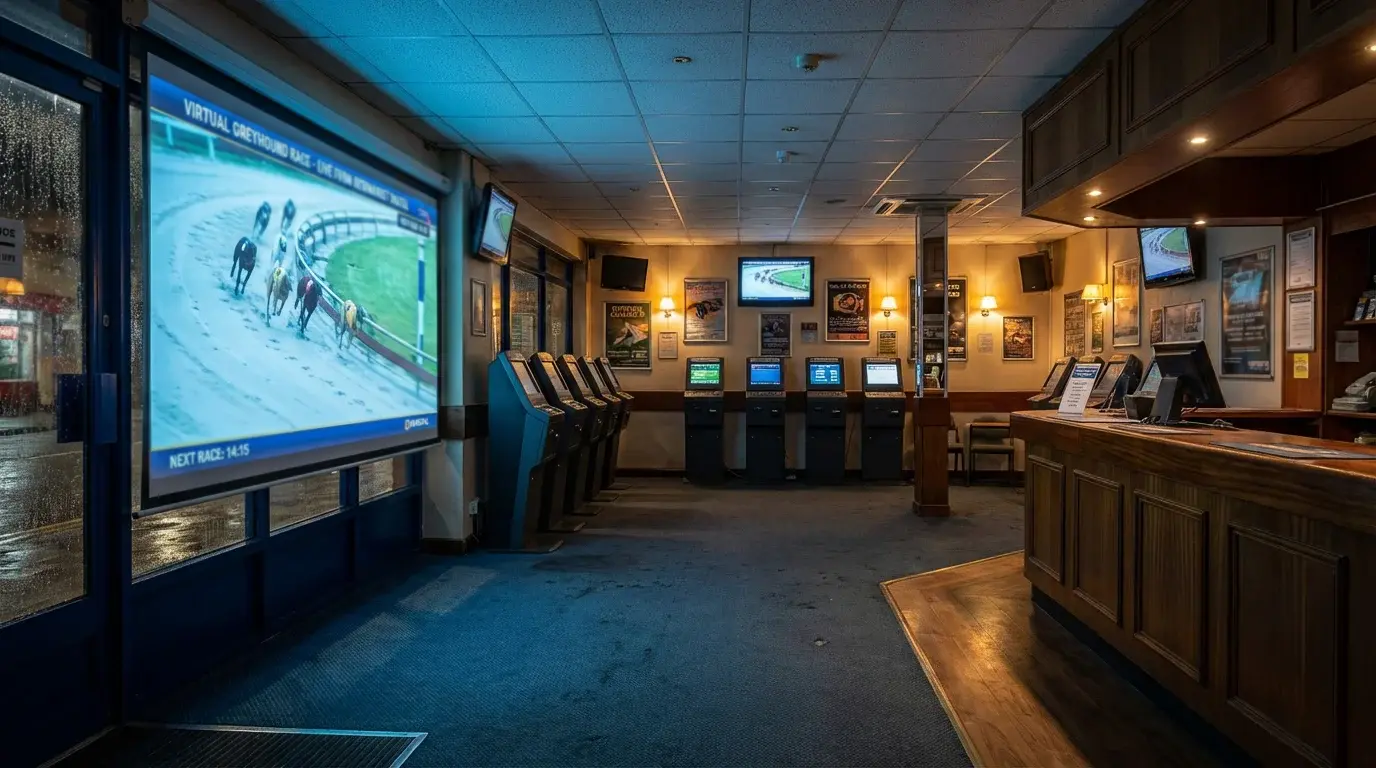
Virtual Greyhound Racing Mechanics and RNG Odds
Virtual greyhound races use random number generators, not real dogs — and the odds work differently from anything you encounter at a licensed track. Virtual racing is a computer-generated product offered by bookmakers as a continuous betting option, available twenty-four hours a day with a new race every few minutes. The on-screen presentation mimics real greyhound racing: animated dogs burst from traps, race around a track, and cross a finish line. But behind the graphics, there is no form, no condition, no trap bias, and no dogs. There is an algorithm.
The core technology is a random number generator, certified and audited for fairness by independent testing agencies. Before each virtual race, the RNG assigns each animated runner a finishing position based on the pre-set probability distribution for that event. The probability of each runner winning is determined by the odds displayed to the bettor, which in turn are set by the software provider to maintain a predetermined overround. The race animation is a visual representation of a result that has already been determined by the algorithm — the dogs do not compete in any meaningful sense.
Virtual greyhound races are offered by most major UK bookmakers, typically in a dedicated “virtuals” section of their website or app. The product is available around the clock, with races cycling every two to four minutes. Each race features six runners — mirroring real greyhound fields — with trap numbers, names, and displayed odds. The presentation is designed to feel familiar to greyhound punters, and the bet types available — win, each-way, forecast, tricast — are the same as for real racing. The similarity is intentional: it lowers the barrier for punters to transition from real racing to the virtual product during gaps in the live schedule.
The operators that produce virtual racing content — companies like Inspired Entertainment and Kiron Interactive — supply the software to bookmakers under licence. The bookmaker takes the bets and pays the winnings, while the content provider supplies the animations, the RNG, and the odds framework. The overround on virtual greyhound markets is typically higher than on real greyhound racing — often 130% or more — reflecting the fact that there is no competitive pricing pressure. You are betting against a single bookmaker’s fixed-margin product, not into a market shaped by multiple operators and an exchange.
Odds and RNG: Why Virtual Greyhound Odds Are Not Form-Based
No form, no conditions, no trap bias — virtual racing is pure probability. This is the single most important distinction between virtual and real greyhound betting, and misunderstanding it is the most expensive mistake a punter can make. In real greyhound racing, the odds reflect an assessment of each dog’s chance based on form, fitness, draw, and conditions. In virtual racing, the odds are the chance. There is nothing behind them except the probability distribution encoded in the software.
When a virtual greyhound is displayed at 3/1, it has exactly a 25% chance of winning — because the RNG is programmed to produce that outcome 25% of the time, minus the overround adjustment. There is no way to improve on this probability through analysis, because there is nothing to analyse. The animated dog in Trap 1 has no history, no sectional times, no preferred running line. It is a graphic attached to a probability. The dog shown at 3/1 in race one has no connection to any other race — its “form” resets completely with each new event because each event is an independent random draw.
Some virtual racing products display form-like information alongside the runners: previous finishing positions, simulated ratings, or pseudo-form figures. These are generated by the software as part of the presentation, not derived from any genuine competitive history. They exist to make the product feel more like real racing, but they have no predictive value. Using them to inform your selections is the equivalent of reading a fictional racecard — the information looks meaningful but corresponds to nothing real.
The mathematical consequence is stark. In real greyhound racing, a skilled form reader can identify mispricings — dogs whose odds do not reflect their true chance of winning — and exploit them for long-term profit. In virtual racing, there are no mispricings. The odds are the probability. The overround ensures that the bookmaker’s margin is applied uniformly to every runner in every race. Over enough bets, a virtual racing punter is guaranteed to lose at a rate equal to the overround, because there is no analytical edge to offset the margin. The house always wins — not in the colloquial sense but in the mathematical one.
Virtual vs Real Greyhound Betting: A Clear-Eyed Comparison
If you treat virtual racing like the real thing, you are applying skill to a coin flip. The comparison between the two products is not a matter of quality or preference — it is a structural difference that determines whether skill can influence your long-term results.
Real greyhound racing is a skill-based betting market with a chance component. The dogs are real, the form is genuine, and the outcomes are influenced by a set of factors — trap draw, fitness, race dynamics, going — that a knowledgeable punter can assess. The bookmaker’s overround creates a margin against the bettor, but that margin can be overcome through superior form analysis, odds comparison, and disciplined staking. Long-term profitability is difficult but achievable for punters who invest the time to develop a genuine edge.
Virtual greyhound racing is a chance-based product with no skill component. The outcomes are generated by an RNG, the overround is fixed across all operators offering the same product, and no amount of study improves your chance of winning beyond the stated probability. It is, in mathematical terms, a negative-expectation game with no available strategy to shift the expectation toward the positive.
This does not mean virtual racing is dishonest or unfair. The RNG is audited, the probabilities correspond to the displayed odds, and the product delivers exactly what it promises: a fast, continuous betting experience based on random outcomes. If you enjoy it as entertainment and accept that your expected return is negative, that is a legitimate recreational choice. The problem arises when punters approach virtual racing with the same analytical mindset they apply to real greyhound racing — studying the displayed form, looking for patterns, varying their stakes based on perceived value — because none of those activities can improve their results.
The practical guidance is simple. If you are serious about greyhound betting as a skill-based pursuit, spend your time and money on real racing. Study the form, learn the tracks, build a selection process, and apply your edge against a market where mispricings exist and analytical skill is rewarded. Use virtual racing, if at all, as a recreational diversion — small stakes, no analytical pretension, and a clear understanding that the outcome is determined by a random number, not by anything you can know, learn, or work out.
