
GBGB Rules and UK Greyhound Racing Regulations
Best Greyhound Betting Sites – Bet on Greyhounds in 2026
 Available in US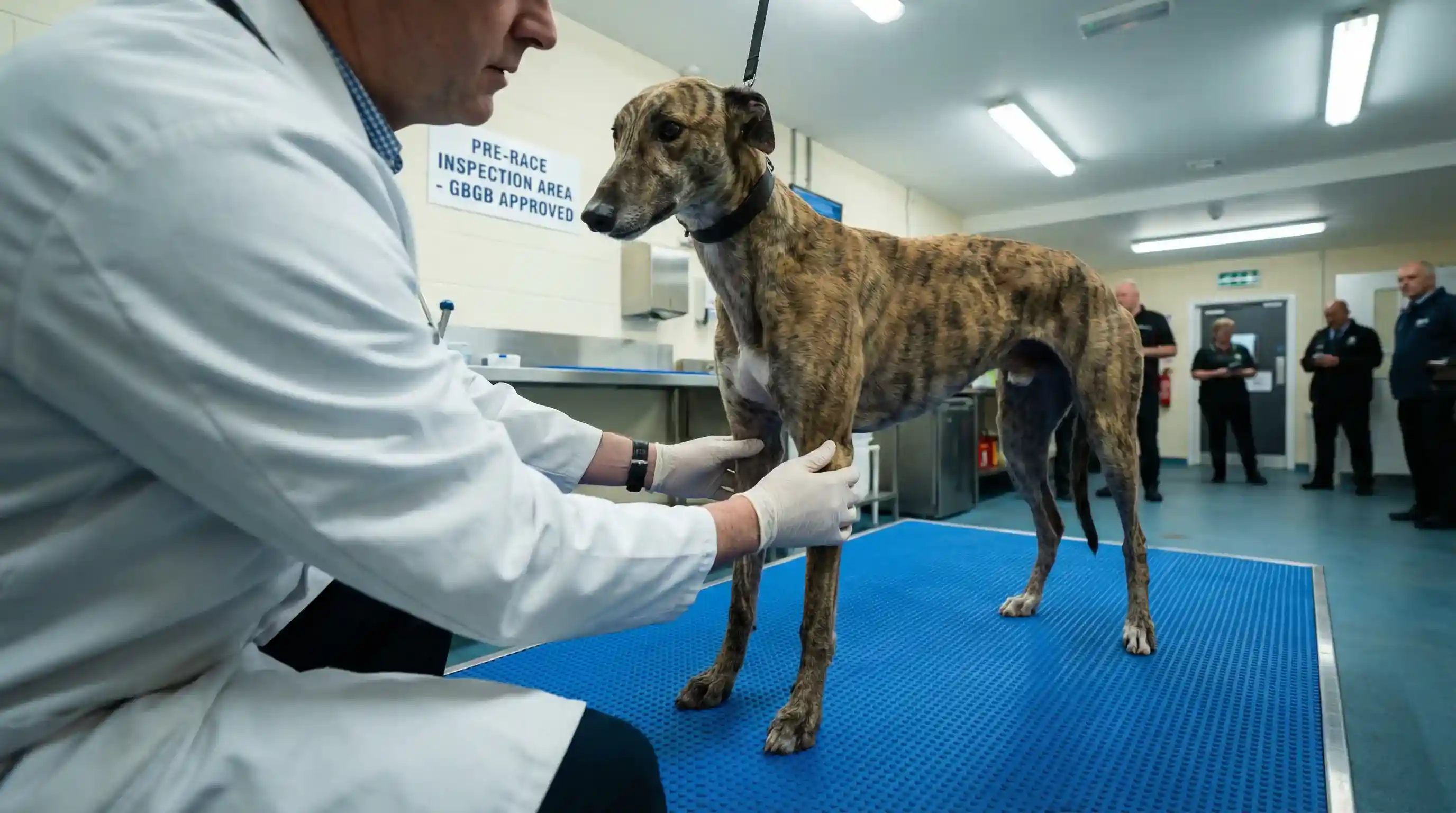
GBGB Regulations and Welfare Standards in UK Greyhounds
The GBGB licenses tracks, registers dogs, and enforces the rules — understanding the structure matters. The Greyhound Board of Great Britain is the self-regulatory body that governs licensed greyhound racing in the UK. It is not a government agency; it is an industry body funded by the sport itself, with authority over the tracks, trainers, and dogs that operate within its licensing framework. For punters, the regulatory structure provides the foundation of trust on which the betting market sits — the assurance that races are run fairly, dogs are identified correctly, and results reflect genuine competition.
GBGB’s remit covers every licensed greyhound track in England, Scotland, and Wales. Northern Ireland operates under a separate regulatory framework. Each licensed track must meet GBGB’s standards for facilities, veterinary provision, safety, and race management. The track’s racing manager — the official responsible for the day-to-day operation of meetings — operates within GBGB’s rules of racing, which cover everything from field sizes and grading procedures to the conduct of trainers and the handling of dogs before, during, and after races.
Every greyhound that competes at a GBGB-licensed track must be registered with the board. Registration involves microchip identification, ear marking, and the recording of the dog’s pedigree, ownership, and training details. This identity framework ensures that the dog running in Trap 3 tonight is the same dog whose form you studied on the racecard — a basic but essential guarantee for betting integrity. Identity fraud in greyhound racing — substituting a faster dog for a slower one — is a form of cheating that the registration and identification system is designed to prevent.
Trainers must hold a GBGB licence, which requires them to meet standards of kennel accommodation, welfare, and professional conduct. Licensed trainers are subject to GBGB’s rules at all times, not just on race nights. Their kennels can be inspected, their training methods reviewed, and their conduct investigated if concerns are raised. The licensing system creates accountability: a trainer who breaches the rules risks suspension, fine, or loss of licence, which removes their ability to operate in the sport.
GBGB also manages the fixture list — the schedule of meetings at each track — and oversees the grading system, though day-to-day grading decisions are made by the racing manager at each individual track. The board publishes rules of racing that define how grades are assigned, how non-runners are handled, how protests are adjudicated, and how prize money is distributed. These rules are publicly available and provide the framework within which every greyhound race in the UK takes place.
Welfare Standards and the Retirement Scheme
Every registered greyhound has a post-racing pathway, and the data is publicly available. Welfare is the most scrutinised aspect of greyhound racing in the UK, and GBGB has implemented a framework of standards and tracking mechanisms that aim to ensure every dog is cared for during its racing career and rehomed after retirement.
During their racing careers, greyhounds at licensed tracks are subject to welfare provisions that cover housing, exercise, nutrition, veterinary care, and race-day treatment. GBGB’s kennel standards specify minimum requirements for accommodation: space per dog, heating, ventilation, bedding, and access to outdoor exercise areas. Veterinary surgeons are present at every race meeting to examine runners before they race, treat injuries, and make decisions about whether a dog is fit to compete. A dog that fails the pre-race veterinary inspection is withdrawn — a welfare decision that takes precedence over any commercial or competitive consideration.
The Greyhound Retirement Scheme, managed by GBGB, tracks the destination of every dog that leaves licensed racing. Trainers are required to report the retirement of each dog and its subsequent placement — whether it goes to a rehoming charity, a private home, another kennel, or remains with the trainer. GBGB publishes annual data on retirement outcomes, providing transparency on what happens to the racing population after competition. The rehoming network includes dedicated greyhound charities such as the Greyhound Trust (formerly the Retired Greyhound Trust) and a network of smaller breed-specific organisations across the UK.
For punters, the welfare framework matters beyond ethics. A well-regulated sport is a more predictable sport. Tracks that maintain high welfare standards produce more consistent racing conditions. Dogs that are well cared for between races perform more consistently than those that are not. The regulatory floor set by GBGB ensures a baseline of care across all licensed tracks, which in turn supports the reliability of the form book that punters depend on. A sport with poor welfare standards would produce erratic results driven by varying levels of dog care rather than genuine competitive differences — and erratic results make form analysis unreliable.
What Regulation Means for Betting Integrity
Drug testing, identity checks, and performance monitoring — the integrity framework that supports fair odds. For punters, the ultimate question about regulation is whether it produces a fair betting product. A fair market requires that the dogs are who they are claimed to be, that they are competing on merit, and that the results are not manipulated. GBGB’s integrity measures address all three requirements.
Drug testing is the most direct anti-manipulation measure. Random and targeted urine and hair samples are taken from dogs at race meetings, and the samples are analysed for prohibited substances. The list of banned substances includes performance-enhancing drugs, sedatives, and other compounds that could affect a dog’s racing ability. A positive test results in the disqualification of the dog’s result, a fine or suspension for the trainer, and potential further investigation. The testing programme is designed to deter as well as detect: the knowledge that testing occurs at every meeting reduces the incentive to attempt doping.
Identity verification is conducted at every meeting through microchip scanning. Each registered greyhound carries a microchip implanted during the registration process, and the chip is scanned before the dog races to confirm that its identity matches the racecard. This prevents the substitution of one dog for another — a form of fraud that, if undetected, would undermine the entire form book. The microchip system is not infallible, but it creates a practical barrier to identity fraud that makes the offence difficult to execute without detection.
Performance monitoring operates at a statistical level. GBGB and track officials monitor race results for unusual patterns — unexpected improvements in a dog’s performance, suspicious betting patterns, and results that deviate significantly from form expectations. While no monitoring system can detect every irregularity, the combination of drug testing, identity verification, and results analysis creates a layered integrity framework. Each layer catches different types of misconduct, and the cumulative effect is a sport where the vast majority of races are run fairly and decided on genuine competitive merit.
The betting market depends on this integrity. When you study a greyhound’s form and make a selection, you are implicitly trusting that the form figures reflect genuine performances by correctly identified dogs competing on merit. GBGB’s regulatory framework is the mechanism that justifies that trust. It is not perfect — no regulatory system is — but it is sufficiently robust that punters can engage with the form book in good faith, knowing that the outcomes they are betting on are, in the overwhelming majority of cases, the product of fair competition.
