
History of UK Greyhound Racing & Betting: 1926 to Today
Best Greyhound Betting Sites – Bet on Greyhounds in 2026
Loading...
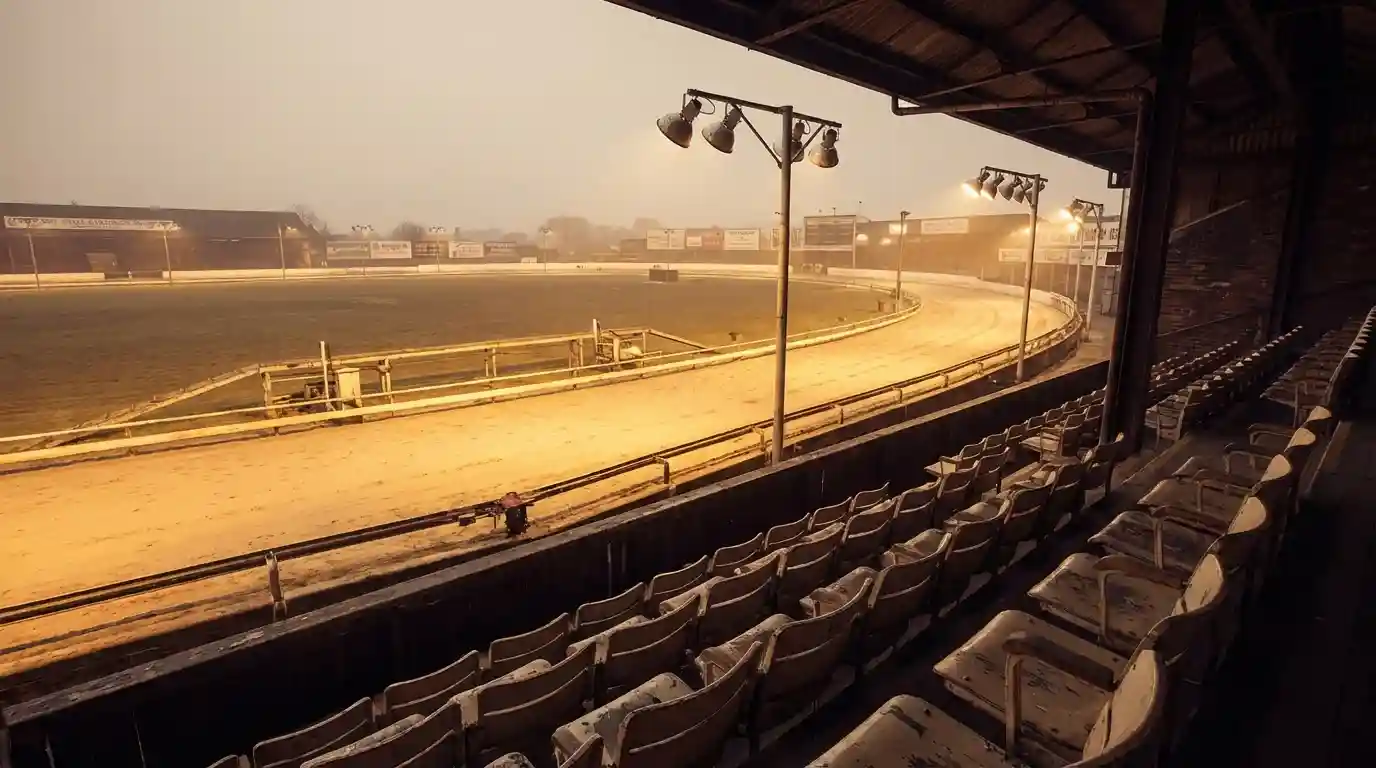
Before the Traps: Coursing and the Origins of the Sport
Long before six dogs chased a mechanical hare around sand, greyhounds coursed live quarry across open fields. The breed’s association with speed and pursuit stretches back centuries in the British Isles, and for most of that history, the sport was coursing — two greyhounds released simultaneously to chase a live hare across open countryside, judged on agility and turning ability rather than outright speed. Coursing was an aristocratic pursuit for much of its existence, codified by the Duke of Norfolk’s rules in the sixteenth century and later governed by the National Coursing Club, established in 1858.
The Waterloo Cup, first run in 1836 near Liverpool, became coursing’s premier event and attracted enormous public interest and heavy gambling throughout the Victorian and Edwardian eras. The event drew tens of thousands of spectators to the fields around Altcar, and the betting market around it was fierce, complex and largely unregulated. Bookmakers operated openly, odds were shouted rather than displayed, and the fortunes wagered on individual dogs rivalled anything seen at the horse racing fixtures of the same period.
Coursing established the cultural and commercial infrastructure that greyhound racing would later inherit: a public appetite for watching fast dogs compete, a betting market willing to price that competition, and a class of enthusiasts who bred, trained and campaigned greyhounds with serious intent. What it lacked was accessibility. Coursing required open land, fine weather, and a willingness to stand in a field for hours. It was seasonal, weather-dependent and impossible to stage in the industrial cities where the majority of the British population lived and worked. The mechanical hare, when it arrived, solved every one of those problems at once.
The idea of dogs chasing an artificial lure around an oval track originated in the United States. Owen Patrick Smith developed a mechanical hare system in the early 1900s and staged the first oval-track greyhound race in Emeryville, California, in 1919. The concept crossed the Atlantic within a few years, and by the mid-1920s, a syndicate of businessmen was preparing to bring it to a city that knew a thing or two about spectator sport and working-class entertainment: Manchester.
Belle Vue 1926: The Night Modern Greyhound Racing Began
Manchester, July 1926 — and the crowd numbered 1,700 for a spectacle nobody quite understood yet. The venue was Belle Vue Stadium, already an established entertainment complex with a zoo, fairground rides and a dance hall. The promoters, led by an American named Charles Munn and backed by a syndicate that included Brigadier-General Alfred Critchley, had secured the rights to stage oval-track greyhound racing in Britain and chosen Manchester as their proving ground. The first meeting took place on 24 July 1926, and by any reasonable measure, it was a modest affair — a few hundred spectators, a handful of races, and a mechanical hare that did not always behave as intended.
What happened next was anything but modest. Within weeks, word had spread. The evening format was ideal for workers who could not attend afternoon horse racing. The stadium setting offered shelter, refreshments and a social atmosphere that coursing’s muddy fields could not match. And the betting, crucially, was fast and accessible — short races run every fifteen minutes, results in seconds, and the tote offering pool betting to anyone with a few shillings. By the autumn of 1926, Belle Vue was attracting crowds of over 10,000. By the end of the year, plans were underway to open tracks in London, Birmingham, Glasgow and half a dozen other cities.
The speed of expansion was remarkable. By the end of 1927, more than forty tracks were operating across Britain. By 1930, the number had passed sixty. The sport had found a gap in the market that nobody had previously identified: evening entertainment with built-in gambling, priced for a working-class audience, staged in purpose-built stadiums that could be built quickly and cheaply on the fringes of industrial cities. Horse racing served the middle and upper classes with its afternoon fixtures, country settings and social rituals. Greyhound racing served everyone else, and there were a lot more of everyone else.
The Belle Vue model — evening meetings, urban location, tote betting, fast-turnover racing — became the template for every track that followed. It was entertainment first and sport second, and the betting was not an add-on but the economic engine that made the whole operation viable. That commercial reality has never changed. From 1926 to the present day, greyhound racing in Britain has been sustained by betting revenue, and every structural shift in the sport — regulation, track closures, the move online — can be traced back to changes in how that revenue flows.
The Golden Era: 1930s–1960s and the Working-Class Stadium
At its peak, greyhound racing drew bigger crowds than football in some cities. That claim sounds implausible now, but the attendance figures from the 1940s and 1950s leave no room for doubt. In 1946, total attendance at British greyhound tracks reached an estimated 75 million — a staggering number for a country of 48 million people, though it includes repeat visits. Even accounting for regulars attending multiple meetings per week, the sport was drawing more paying customers through the turnstiles than any other spectator activity in Britain.
The reasons were structural as much as cultural. Greyhound racing offered evening entertainment when few alternatives existed. Television was not yet widespread. Cinemas closed early. Pubs shut at 10.30pm. The dogs offered warmth, light, company, a drink, a bet and the thrill of watching fast animals compete — all for a modest admission price. For millions of working-class Britons in the post-war decades, a night at the dogs was the default social outing. Families went. Couples went on dates. Works outings went. The stadiums were community venues as much as sporting arenas.
The betting ecosystem was sophisticated by the standards of the era. On-course bookmakers shouted odds from their pitches, adjusting prices in real time as money came in. The tote offered pool betting with automatic calculation of dividends. Off-course betting was technically illegal until 1961, but illegal bookmakers — street bookies, factory bookies, pub bookies — took greyhound bets as readily as they took horse racing bets, and the enforcement of the prohibition was sporadic at best. The greyhound economy was, in effect, a parallel betting market operating alongside the officially sanctioned horse racing industry.
The tracks themselves became landmarks. White City in London, opened in 1927 for greyhound racing, had a capacity of 68,000 seated — with standing room accommodating over 90,000, as demonstrated by the record 92,000 crowd at the 1939 Greyhound Derby final — and hosted the Greyhound Derby from 1927 until its closure in 1984. Wimbledon, Wembley, Catford, New Cross, Harringay, Hall Green, Perry Barr — these were not fringe venues. They were major stadiums in the heart of British cities, and their fixture lists ran year-round. The sport generated employment, tax revenue and a culture of expertise that included trainers, kennel staff, form compilers, journalists and professional gamblers who made their living from reading the form book.
What the golden era created, above all, was infrastructure: physical stadiums, a regulatory framework, a betting market, a media presence and a public that understood the product. That infrastructure would erode steadily over the following decades, but its influence on the shape of British greyhound racing — and on the betting culture that surrounds it — persists to this day.
Regulation and the Role of the NGRC and GBGB
Regulation did not just clean up the sport — it made the odds trustworthy. The early decades of greyhound racing were plagued by the same integrity problems that afflicted every betting sport of the era: doping, race-fixing, rigged trials and corrupt officials. The rapid expansion of the late 1920s had produced tracks of wildly varying standards, and the absence of centralised regulation meant that the rules, such as they were, differed from venue to venue. For the betting public, this meant that the odds were unreliable — a dog’s form might reflect genuine ability or it might reflect deliberate manipulation by connections looking to engineer a betting coup.
The National Greyhound Racing Club, established in 1928, was the sport’s first serious attempt at self-regulation. The NGRC introduced standardised rules of racing, a registration system for dogs, licensing requirements for trainers and officials, and — critically — random doping controls that gave the public some confidence that the results were genuine. The NGRC operated as the sport’s governing body for the better part of eighty years, gradually tightening its regulatory framework as the scale and complexity of greyhound betting grew.
In 2009, the NGRC was replaced by the Greyhound Board of Great Britain, which assumed regulatory authority over all licensed tracks. The GBGB operates with a broader mandate that includes animal welfare alongside racing integrity, reflecting the increased public and political scrutiny of greyhound welfare in the twenty-first century. The GBGB administers drug testing, injury reporting, retirement tracking and kennel inspections, and it publishes data on racing results that underpins the form services punters rely on.
From a betting perspective, the significance of regulation is straightforward: it is the mechanism that makes greyhound odds meaningful. If races are not run fairly, odds are just numbers. The GBGB’s integrity framework — imperfect as any regulatory system is — provides the baseline assurance that the form book reflects genuine performances. Punters who study form, compare odds and seek value are, whether they realise it or not, relying on that regulatory framework every time they place a bet.
The Decline: Track Closures from the 1970s Onward
From seventy tracks to twenty — the shrinkage is real, and the reasons are complicated. The decline of British greyhound racing as a mass-attendance sport began in the late 1960s and accelerated through the 1970s and 1980s. The proximate causes are familiar to anyone who has studied the economics of urban leisure: television killed the captive evening audience, car ownership enabled people to seek entertainment further afield, and competing attractions — bingo, nightclubs, later home video — eroded the dogs’ monopoly on cheap weeknight entertainment.
But the deeper cause was property economics. Greyhound stadiums occupied large plots of land in urban and suburban locations, and by the 1970s, those plots were worth far more as residential or commercial development sites than they could ever generate from admission fees and tote turnover. Track owners faced an irresistible financial logic: sell the land, close the stadium, and bank a profit that decades of racing could not match. White City, which had been the flagship of British greyhound racing since 1927, closed in 1984 and was redeveloped as the BBC’s White City complex. Wembley, Catford, Wimbledon, Hackney, Oxford — one by one, the great stadiums of the golden era were sold and demolished.
The closures were not evenly distributed. London, where land values were highest, lost the most tracks. The capital went from hosting more than a dozen licensed venues in the 1950s to just two — Romford and Crayford — by the 2010s. The Midlands, the North and the South West retained more tracks, partly because land values were lower and partly because the stadiums served communities with fewer alternative entertainment options. But even in these regions, the trend was downward. Every decade since the 1970s has seen further closures.
The sport that survived the cull is leaner and more dependent on betting revenue than ever. The stadiums that remain are, with a few exceptions, functional rather than grand — purpose-built or heavily modified venues that prioritise efficient racing and broadcasting over spectator experience. Attendance revenue is a fraction of what it was; the real money comes from bookmaker contributions, media rights and the tote. The golden era’s model of greyhound racing as mass entertainment has been replaced by a model of greyhound racing as a betting medium, and that shift has consequences for everything from track maintenance to race scheduling.
How Betting Shifted: From Trackside Bookies to Online Odds
The tote window and the on-course bookie defined greyhound betting for decades — until the internet arrived. For the first seventy years of the sport’s existence, placing a bet on a greyhound race required physical presence: either at the track itself, using the on-course bookmakers or the tote, or in a licensed betting shop after the Betting and Gaming Act 1960 legalised off-course cash betting. The betting shop era transformed greyhound racing’s economics by massively expanding the potential customer base — a punter no longer needed to travel to the stadium to have a bet — but it also began the process of separating the betting experience from the racing experience.
In the betting shops, greyhound racing was piped in via the Satellite Information Services feed, and punters watched on screens and bet at the counter. The races were the same, but the atmosphere was different: no parade ring, no feel for the track conditions, no watching the dogs warm up. Betting decisions were made from the form card on the wall and the odds on the screen. This suited the bookmakers well, because it shifted the balance of information toward the house — the punter in the betting shop had less data to work with than the punter at the track — and it generated higher volumes of bets at lower average stakes.
The internet revolution of the late 1990s and 2000s accelerated this separation further and simultaneously democratised the information landscape. Online bookmakers offered greyhound betting to anyone with a computer, initially on the major evening meetings and soon on the full BAGS card. The volume of greyhound betting grew even as track attendance continued to fall, because the convenience of online wagering attracted punters who would never have visited a stadium. At the same time, form data migrated online. Racecards, results, sectional times and trap statistics that had previously been available only to dedicated trackgoers or through paid print services became accessible to anyone with a browser.
Betting exchanges — Betfair launched in 2000 — added another dimension. For the first time, greyhound punters could bet against outcomes as well as for them, and could trade positions during the pre-race market. The exchange model exposed the true market price of each dog by matching backers directly with layers, removing the bookmaker’s overround from the equation and replacing it with a smaller commission. This was a structural change in how greyhound odds were formed, and it gave sophisticated punters a tool that the on-course bookmaker’s pitch had never offered: the ability to lock in value by trading before the off.
The combined effect of betting shops, online bookmakers and exchanges has been to transform greyhound racing from a stadium-based sport with attached betting into a betting product with attached racing. The dogs still run. The form still matters. But the commercial centre of gravity has shifted decisively from the grandstand to the screen.
Greyhound Racing Today: BAGS, SIS and the Digital Card
Modern greyhound racing runs morning, noon and night — driven by bookmaker-funded BAGS meetings. The Bookmakers Afternoon Greyhound Service, established in 1967, is the commercial engine that sustains the majority of UK greyhound racing in 2026. BAGS meetings are financed by contributions from licensed bookmakers who use the racing as a betting product in their shops and on their websites. The arrangement is straightforward: bookmakers pay for the racing to take place, and in return they receive the exclusive right to offer betting on those meetings through the SIS (Satellite Information Services) broadcast feed.
The economics shape the product. BAGS meetings are designed for betting efficiency rather than spectator appeal. They are typically staged during the day — morning and afternoon slots that fill gaps in the betting shop schedule between horse racing cards — and feature twelve to fourteen races with short intervals between them. The grading is functional rather than aspirational: the aim is to produce competitive, watchable races that generate betting turnover, not to showcase the finest dogs in the country. Open races and feature events are largely reserved for the evening meetings, which still attract on-course audiences and carry higher profile.
The SIS feed delivers live pictures of greyhound racing to every licensed betting shop and online operator in the UK, and the sheer volume of coverage is striking. On a typical day, there are BAGS meetings at multiple tracks running from late morning through to early evening, followed by evening fixtures that cater to the traditional racegoing audience. A punter with an online account can bet on greyhound racing virtually any time between 10am and 10pm, which makes the sport one of the most constantly available betting products in the British market.
This constant availability is a double-edged sword. For disciplined punters with a clear strategy, the volume of racing creates more opportunities to find value bets at their specialist tracks. For undisciplined punters, it creates a treadmill of low-quality action that encourages over-betting and erodes bankrolls. The digital racecard — comprehensive form data available instantly on a phone — puts serious analytical tools in every punter’s pocket. But tools are only useful when applied with discipline, and the sheer availability of BAGS racing makes discipline harder to maintain.
Under the Lights and Into the Data: Where the Sport Goes Next
The tracks are fewer, the punters are online, and the data is deeper than it has ever been. That is the present state of British greyhound racing in three clauses, and each one carries implications for where the sport goes from here.
Fewer tracks means greater concentration. The eighteen licensed GBGB venues are unlikely to grow in number — the economics of building a new greyhound stadium in Britain in 2026 simply do not work — and further closures remain possible if land values continue to rise and betting revenues stagnate. The tracks that survive will be those that find a sustainable model: a combination of bookmaker-funded BAGS racing, profitable evening meetings with on-course attendance, and diversified revenue from functions, events and hospitality. Some tracks have already moved in this direction, investing in restaurant facilities and corporate areas that draw a different audience from the traditional trackside crowd.
The move to online punting is irreversible. Track attendance may stabilise at a modest level, sustained by the social experience and the appeal of live sport, but the vast majority of greyhound bets will continue to be placed through screens. This has consequences for how form is consumed, how odds are set, and how the betting market behaves. Online punters have access to more data than trackside punters ever did, but they lack the sensory information — watching the dogs move, reading the track conditions, observing the parade — that once gave regular attendees an edge. The successful greyhound punter of the coming decade will likely be someone who combines digital data analysis with selective track visits, using each information source to compensate for the other’s blind spots.
The data revolution is the most transformative element. Historical form, sectional times, trap statistics, trainer records, breeding data and market movements are all available digitally, and the tools to analyse them — from spreadsheets to custom-built models — are within reach of any motivated punter. This democratisation of information does not eliminate the bookmaker’s advantage, but it compresses it. The gap between what the market knows and what an informed individual can know is narrower than at any point in the sport’s hundred-year history. For punters willing to invest the time and discipline, that compressed gap is the opportunity. The traps still open. The hare still runs. And for those who have done the work, the numbers still tell a story worth reading.